
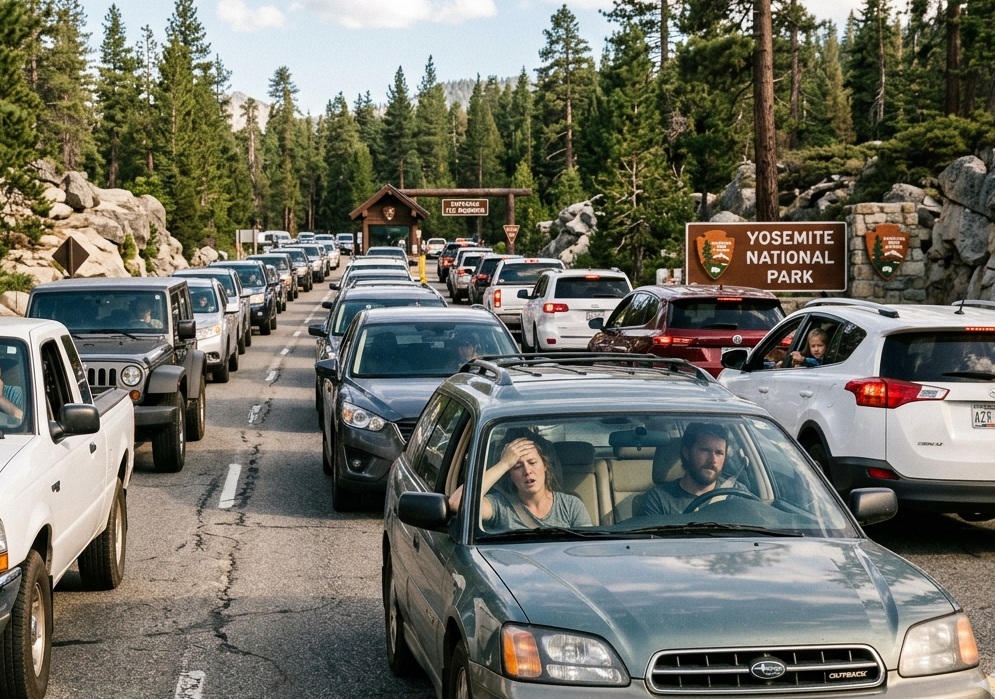
My real-world guide to hiking Yosemite trails, crowds and wait times
By Cap Puckhaber, Reno, Nevada
Updated: 11/21/26
My first look at Yosemite Valley came through the Wawona Tunnel. I pulled into the Tunnel View lot, saw El Capitan on the left and Bridalveil Fall on the right, and just stood there. That view still stops me every time. What I didn’t expect on that first trip was the traffic. Getting into the park and finding a place to park ended up taking almost as long as the hike.
Since then, I’ve learned that a great Yosemite trip depends on timing as much as trail choice. This guide combines my trail picks with what I’ve learned about gate lines, parking and permits. Park rules here change often, so I’ll point you to the official pages for anything that shifts from season to season. The trails, the crowd patterns and the tricks for beating them stay pretty consistent.
Why I usually come in from the east side
Living in Reno gives me a back door into Yosemite. When Tioga Road is open, I drive south on Highway 395, turn west at Lee Vining and climb over Tioga Pass. That route drops me into Tuolumne Meadows at about 8,600 feet, far from the Valley crowds. Most summer weekends, the east entrance line is a fraction of what you’ll see on Highway 41 or Highway 140.
Tioga Road closes for the winter, usually after the first big snow in fall. It typically reopens sometime in late spring or early summer, depending on the snowpack. When it’s closed, the drive from Reno to the Valley gets much longer because you have to loop around through the west side entrances. I check the NPS road status page before every trip, because a closed pass changes the whole plan.
Lee Vining is my last stop before the climb. I fill the gas tank there, since fuel inside the park is limited and pricey. The gas station deli at the Highway 120 junction makes a solid breakfast burrito, which has become a trip tradition. From there, it’s about 12 miles up to the Tioga Pass entrance at nearly 10,000 feet. Starting at that elevation also means a cool morning, even in July.
What the gate looks like without reservations
For the 2026 season, Yosemite dropped its timed entry system entirely. According to the Yosemite entrance reservations page, the park chose real-time traffic monitoring, active parking management and extra staff at busy intersections instead. You still pay the entrance fee, but nobody needs an advance ticket to drive in. That sounds like good news until you see a Saturday line at the south entrance.
The last time the park ran a summer without reservations, back in 2023, peak-day entrance waits stretched to nearly three hours. On one busy May weekend this past season, Valley lots filled before 11 in the morning. The south entrance on Highway 41 backed up about 90 minutes that day. Even the Hetch Hetchy overflow lot filled by midday, which surprised me.
Wait times I plan around
These are the patterns I’ve seen and now plan for. Weekdays before 8 in the morning, I rarely wait more than 15 minutes at the gate. From mid-morning into the early afternoon on weekdays, 30 to 45 minutes is common. Weekends after 9 in peak summer can run 90 minutes to three hours. Holiday weekends add another 30 to 60 minutes on top of that.
Parking follows the same curve. Valley lots usually fill by late morning on busy days. Once that happens, rangers can divert traffic at El Capitan Crossover and send cars back out of the east Valley. That diversion can kick in as early as twenty past eight on a busy Saturday.
Why the park made this call
The park’s reasoning was that most weekdays had open parking and traffic stayed within capacity. That matches what I’ve seen on Tuesdays and Wednesdays. Reservations also locked out spontaneous visitors and anyone who couldn’t plan months ahead. Removing the system doesn’t reduce the number of visitors, though. It just removes the tool that spread them across the day.
Honestly, I see both sides of this one. Reservations made my own trips smoother, since I always booked early. Friends who decide on a Thursday night to go hiking hated the system, and I understand why. My take is simple. Without a reservation to pace the crowds, your own timing has to do that job instead.
A powder Saturday taught me how Yosemite lines work
I ski a lot in the winter, and Yosemite’s gate works exactly like a lift line on a powder Saturday at a Tahoe resort. Show up at half past eight, and you’re one of a thousand people who had the same idea. An hour later, you’ll spend more time standing than riding. The skiers who get the best runs are already in line when the lifts start turning. They’re done and eating lunch when everyone else is still in the parking lot.
Yosemite rewards the same habit. The crowd isn’t spread evenly across the day, it piles up in a wave between about 8 and noon. Get ahead of that wave, and the park feels almost empty. Once you’re caught in it, and you’ll spend the best hiking hours staring at the bumper in front of you.
How I beat the lines
None of these tricks are secrets, but most visitors don’t use them. Each one has saved me hours on a single trip. Stack two or three together, and a peak-season weekend becomes manageable.
The 6 a.m. rule
On weekends and holidays, I aim to be at the gate by 6 in the morning. That sounds brutal, but the payoff is huge. Before 7 on a weekend is the only window where I can count on parking and almost no gate delay. The light on the Valley walls is better too, and the trails are quiet for the first few hours. Mist Trail at 7 in the morning feels like a different park than Mist Trail at noon.
Arriving early also fixes the parking problem. I once spent 90 minutes circling Valley lots looking for a spot so I could hike the Mist Trail. By the time I parked, the trail was packed and the day was hot. That one morning turned me into an early riser for every Yosemite trip since.
The Tuesday and Wednesday window
If you can choose your days, choose Tuesday or Wednesday. Those are the lightest days I’ve seen in summer, and the park’s own data backs up the weekday pattern. Gate lines are short, parking is easier, and popular trailheads feel normal. Sunday afternoons and Fridays are the worst, since weekend crowds arrive and leave in waves.
Park once, then ride
Once I find a Valley parking spot, the car doesn’t move until I leave. The free Valley shuttle connects the main trailheads, lodges and visitor areas. That frees you from hunting for a new spot at every stop, which is where most people lose an hour. YARTS buses run into the park from towns like Merced, so you can skip driving the Valley altogether. Riding YARTS cut my transit stress more than any other trick, because I wasn’t watching the clock in a gate line.
Fees and passes before you drive in
The standard vehicle entrance fee is $35, and it covers seven consecutive days. Gates don’t take cash, so bring a card or buy the pass online through Recreation.gov ahead of time. The America the Beautiful annual pass covers entry for U.S. residents and pays for itself in a few park visits. If the entrance station is unstaffed when you arrive early, you can pay on the way out.
International visitors face a different bill. Starting in 2026, nonresidents 16 and older pay an extra $100 per person on top of the standard fee. A nonresident annual pass costs $250 and skips that surcharge. If you have friends visiting from overseas, run those numbers before the trip so the gate doesn’t surprise them.
Valley hikes worth the early alarm
The Valley holds the trails most people come for, and the early start pays off most here. Yosemite Falls drops about 2,425 feet in three sections, and El Capitan rises roughly 3,000 feet from the Valley floor. Both look completely different from the trail than from the road. My go-to Valley hikes range from flat strolls to a full-day grind.
Mist Trail and the repair closures
The Mist Trail is my favorite hike in the park. It climbs granite steps past Vernal Fall, then keeps going to the top of Nevada Fall. You’ll find current numbers on the Vernal Fall and Nevada Fall trail page. The top of Vernal Fall is 2.4 miles round trip with about 1,000 feet of gain. Going on to Nevada Fall makes it 5.4 miles round trip with about 2,000 feet of gain. In spring, the spray soaks you, so pack a rain jacket even on a sunny day.
The trail has been under heavy repair, with stonework replaced and steps rebuilt. Portions closed on weekdays during the work, with hikers detoured onto the John Muir Trail. That detour reaches the top of both falls on a longer, gentler route. Check the NPS trail page before you go, since closure days and hours have shifted during the project.
Upper Yosemite Fall
Upper Yosemite Fall is the Valley’s toughest standard day hike. It’s about 7.2 miles round trip with roughly 2,700 feet of climbing on steep, sun-exposed switchbacks. Start early, because the south-facing wall bakes by late morning in summer. I carry at least three liters of water and salty snacks for this one. The view from the top, looking straight down the falls, is worth every step.
Easy Valley walks
Not every day needs a big climb. The Lower Yosemite Fall loop is about a mile, paved and accessible. Mirror Lake is a flat walk of about two miles round trip, best in spring when the water is high. The Valley Loop Trail follows the Merced River, and you can do as much or as little as you like. My favorite lazy afternoon is sitting in El Capitan Meadow with binoculars, watching climbers inch up the wall.
Where I go when the Valley is packed
On peak days, I skip the Valley entirely. The park pushes visitors toward Tuolumne Meadows, Wawona and Hetch Hetchy too, and for good reason. These areas have their own big views, with a fraction of the people. Most first-time visitors never see them.
Glacier Point, Sentinel Dome and Taft Point
Glacier Point looks straight across at Half Dome, and sunrise there is one of my favorite moments in the park. Sentinel Dome is a short hike from the Glacier Point Road, about 2.2 miles round trip with a little climbing at the end. Taft Point starts from the same trailhead and ends at a sheer drop with fissures in the rock. Glacier Point Road closes in winter, so plan these for late spring through fall. The Four Mile Trail also links Glacier Point to the Valley, though I’d call it closer to 4.8 miles of steep downhill.
Tuolumne Meadows and Hetch Hetchy
Tuolumne Meadows sits at about 8,600 feet, so summer days stay cool. Flat walks along the Tuolumne River are easy, and Cathedral Lakes makes a great half-day hike with granite peaks above the water. Clouds Rest, reached from the Tenaya Lake area, has a view I like better than Half Dome. Because of the elevation, give yourself an easy first day if you’re coming from sea level.
Hetch Hetchy is the quietest corner I know. On one summer day there, I counted fewer than 40 other visitors from morning to evening. The trail across the dam toward Wapama Falls is about five miles round trip and gets hot by afternoon. Spring is the best time, when the falls are roaring.
Wawona and the Mariposa Grove
The Mariposa Grove near the south entrance holds hundreds of mature giant sequoias. Its star is the Grizzly Giant, and the walk to it is short and well graded. Longer loops climb higher into the grove, where crowds thin out fast. I like pairing the grove with a stop in Wawona on the way into or out of the park. Arriving early matters here too, since the welcome plaza lot fills on summer weekends.
Half Dome permits still matter
Dropping the entrance reservation didn’t change the Half Dome rules. You still need a permit to climb the cables, and they’re awarded by lottery through Half Dome permits on Recreation.gov. The preseason lottery takes applications throughout March, with results in mid-April. Each application costs $10, and each awarded hiker pays another $10. A smaller daily lottery runs two days in advance while the cables are up.
The cables usually go up the Friday before Memorial Day and come down the Tuesday after Columbus Day, depending on conditions. Round trip, the full hike runs 14 to 16 miles round trip with more than 4,800 feet of gain. Its last 400 feet are on the cables, on bare granite that gets slick when wet. Turn around if storm clouds build, since lightning on that dome is no joke. Bring gloves with good grip, because the cables tear up bare hands quickly.
Backpacking and wilderness permits
Every overnight trip into Yosemite’s wilderness needs a permit. Sixty percent of the quota opens 24 weeks before the start date, and the other 40 percent releases seven days ahead. Bear canisters are required for all food and scented items in the backcountry. Camp at least 100 feet from water and trails. The John Muir Trail starts or ends in the Valley, and Clouds Rest makes a great one or two night trip.
If you want to keep going south, my John Muir Wilderness itinerary covers shorter trips from the Eastern Sierra. Campground reservations inside the park open five months ahead and sell out within minutes in summer. Lodges book up as far as a year out. Without a reservation, plan on staying outside the park and driving in early.
The mistake that earned me a ranger visit
My worst Yosemite mistake happened near Tuolumne Meadows. After a long day, I was tired and lazy, so I pitched my tent about 30 feet from a lake. A ranger woke me up that evening and gave me a warning. It could easily have been a fine. The rule is 100 feet for good reason, since campsites at the water’s edge damage fragile shoreline. Don’t let fatigue make the call on where you sleep, and pace off the distance before you stake out the tent.
When I’d plan a Yosemite trip
Late spring is my favorite season, roughly May into early June. Snowmelt pushes the waterfalls to their peak, and Yosemite Falls roars loud enough to hear across the Valley. Crowds build quickly as summer gets closer, so weekday visits matter more than ever then. Higher trails like Clouds Rest and Cathedral Lakes may still hold snow.
Summer brings full access, including Tioga Road and Glacier Point Road, but also the biggest crowds and the hottest Valley days. Start hikes before sunrise and finish the climbs before noon. Fall is quieter, with cooler air and smaller lines, though many waterfalls run thin by then. Winter closes the high roads, yet the Valley can be beautiful for snowshoeing and quiet walks.
What I pack for a Yosemite day hike
For any day hike here, I carry at least three liters of water, salty snacks and a rain jacket. Shoes should be broken in, since granite steps chew up new boots fast. I also pack the ten essentials, including a headlamp, because Valley trails get dark early under those tall walls. Dogs stay home for trail days, because pets aren’t allowed on most Yosemite trails. Our dog does fine on paved Valley paths and the Wawona Meadow Loop instead.
How I’d spend one day or three
With only one day, I’d pick the Valley and commit to my early gate rule. Start with sunrise at Tunnel View, then park once near Yosemite Village and hike the Mist Trail to the top of Vernal Fall. After lunch, walk the Lower Yosemite Fall loop and rest in El Capitan Meadow. Before dark, drive back to Tunnel View for evening light on El Capitan and Half Dome. That plan covers the big sights without spending half the day in the car.
A relaxed three day plan
Three days let you spread out and dodge the worst of the crowds. Day one goes to the Valley, with the Mist Trail in the morning and easy walks in the afternoon. On day two, head up Glacier Point Road for sunrise at Glacier Point, Sentinel Dome and Taft Point. Your third day depends on the season. In summer, I’d drive Tioga Road to Tuolumne Meadows for Cathedral Lakes. Come spring, Hetch Hetchy and Wapama Falls make a better choice.
Whichever way you split it, put the most popular hike on your best weekday. Save the quieter corners for the busier days, since those areas absorb crowds much better than the Valley does. A packed Saturday at Tuolumne still feels calmer than a quiet Tuesday at Yosemite Village.
Is hiring a guide worth it?
For most day hikes, I don’t think a guide is necessary. Valley trails are well marked, busy and easy to follow. A guide makes more sense for a first backpacking trip, a climbing lesson or a group that wants someone else handling logistics. Guided trips also take the permit hassle off your plate, since many outfitters secure wilderness permits for their groups. If you go that route, use a company with a permit to operate in the park.
Frequently Asked Questions
Do I need a reservation to enter Yosemite?
Yosemite dropped its timed entry reservation system for the 2026 season. You still need to pay the entrance fee or show a valid pass. Rules can change each year, so check the NPS reservations page before you go.
How long are the wait times at Yosemite’s entrance gates?
On weekdays before 8 in the morning, waits are usually 15 minutes or less. Weekend waits after 9 in peak summer can run 90 minutes to three hours. Arriving by 6 in the morning on weekends avoids most of the line.
What happens if Valley parking is full when I arrive?
Rangers may divert traffic at El Capitan Crossover and route cars back out of the Valley. If that happens, head to Glacier Point, Tuolumne Meadows, Wawona or Hetch Hetchy instead. You can also park outside the Valley and come back later in the afternoon when lots start to clear.
Can I hike Half Dome without a permit?
No, you need a permit to climb the Half Dome cables. Permits come from a preseason lottery in March or a daily lottery held two days in advance. You can hike to the base of the subdome without one, but you can’t go up the cables.
What is the best easy hike in Yosemite?
Lower Yosemite Fall is the best easy option, at about a mile on a paved loop. Mirror Lake is another flat choice at about two miles round trip. Sentinel Dome is short too, with a huge view for very little climbing.
When is the best time to see Yosemite’s waterfalls?
Late spring, roughly May into early June, is the best time for waterfalls. Snowmelt pushes flow to its peak, and the Mist Trail gets soaked with spray. By late summer and fall, many falls slow to a trickle.
My Picks for Zion National Park Hikes
Grand Canyon Guide to Closures and Trails
Hiking and Backpacking Yellowstone
Check out news on new national park fees
Follow Cap Puckhaber on Social Media
- Connect with Cap Puckhaber on Facebook
- See Cap Puckhaber’s latest adventures on Instagram
- Read Cap Puckhaber’s thoughts on X
- Join the conversation on Threads
- Follow Cap Puckhaber on Mastodon
- Browse my Pins on Pinterest
- See my Hiking Articles on Medium
- Follow Cap Puckhaber’s Company Page on LinkedIn
- More Hiking and Snowboarding on BSKY


About the Author: Cap Puckhaber
Backpacker, Marketer, Investor, Blogger, Husband, Dog-Dad, Golfer, Snowboarder
Cap Puckhaber is a marketing strategist, finance writer, and outdoor enthusiast from Reno, Nevada. He writes across CapPuckhaber.com, TheHikingAdventures.com, SimpleFinanceBlog.com, and BlackDiamondMarketingSolutions.com.
Follow him for honest, real-world advice backed by 20+ years of experience.